
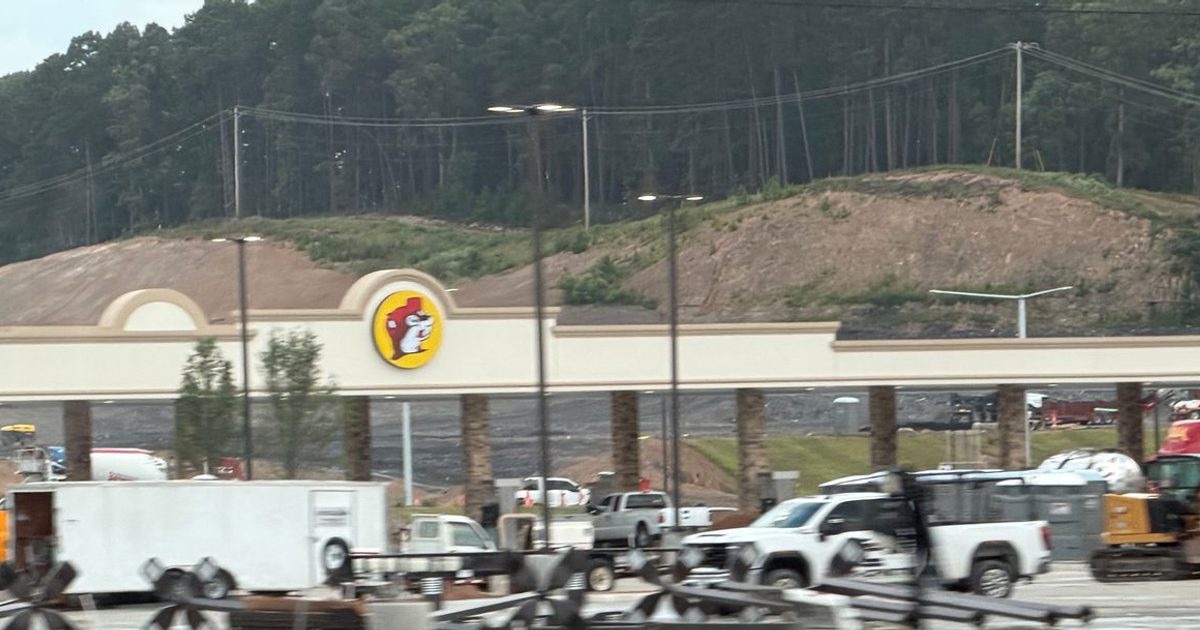
When the doors open at 6 a.m. on August 17, 2026, the first Buc-ee's in Arkansas — 74,000 square feet at Exit 114 in Benton, with 120 gas pumps and 750 parking spots — becomes the biggest walk-in refrigerator-slash-brisket-kitchen in Saline County. And every traveler who walks in sweating from the parking lot will feel the same thing in the first second: a wall of cold, dry air. That moment is not luck. It's one of the hardest HVAC problems in commercial construction, solved at scale.
We're an HVAC company headquartered fifteen minutes up the road, so consider this our love letter to the machinery. We're not the contractor on the project — Buc-ee's doesn't publish its mechanical schedule — but the physics of a building like this is universal, and the napkin math is a blast. Here's what it takes.
The napkin math
How many BTUs does it take?
Cooling loads for high-traffic retail with heavy food service in a hot-humid climate run far past ordinary retail numbers. Between the door swings, the crowd, the coolers, the kitchen, and an Arkansas sun beating on the roof, standard commercial load math puts a building like this at roughly:
The estimated numbers
- 250–300 tons of cooling — that's 3 to 3.6 million BTU per hour. A typical Central Arkansas home runs a 3-ton, 36,000-BTU system, so this one building carries the cooling load of roughly 90 houses.
- A fleet of 15–25 rooftop units (RTUs), most in the 12.5-to-25-ton class, zoned across the sales floor, kitchen, restrooms, and back-of-house — no single giant machine, because redundancy matters when you can't ever close.
- Dedicated kitchen ventilation — exhaust hoods over the brisket boards and fryers pulling thousands of CFM out, matched by makeup-air units that must cool and dry 95-degree outdoor air before it reaches the floor.
- Separate refrigeration racks for the wall of drink coolers, freezers, and food cases — refrigeration on top of comfort cooling, each dumping its own waste heat that the RTUs have to fight.
These are our engineering estimates from standard load calculations — not the project's actual mechanical schedule.
The door problem
Thousands of door swings a day
The hardest part isn't the size — it's the traffic. Every time the doors cycle, a slug of July air comes in at 95 degrees with dew points in the 70s. Multiply by thousands of entries a day and the entry vestibule becomes a battlefield. The standard weapons: positive building pressure (slightly more air pushed in than exhausted, so conditioned air leaks out instead of humid air leaking in) and generous capacity near the entrances. Positive pressure also keeps kitchen smoke and fuel-island odors from drifting across the famous clean restrooms.
The humidity war
Cooling is easy. Drying is hard.
Arkansas summer air holds a staggering amount of water, and a comfortable store isn't just cold — it's dry. Commercial systems here lean on aggressive dehumidification: cooling coils run cold enough to wring moisture out of the incoming air, and smart controls juggle temperature against humidity all day. Get it wrong and you don't just get sticky customers — you get condensation, mold risk, and fogged-up cooler doors.
Sound familiar? It's the exact same fight your house is in every July — your system just fights it at 3 tons instead of 300. If your home feels cold but clammy, that's a humidity problem, and it usually traces back to a system issue or an oversized unit that short-cycles.
Why it matters here
What Benton gets out of it
Beyond the beaver nuggets: 200-plus jobs, a landmark at Exit 114, and — for those of us who love this trade — the biggest piece of climate-control engineering Saline County has ever seen, sitting right on our home turf. We service commercial systems across Central Arkansas, and buildings like this one are the varsity level of the same game: load calculations, airflow, humidity, and honest maintenance.
So when you walk in on August 17 and that first wave of cold air hits you — take a second to look up. Somewhere above the ceiling, a small fleet of machines is winning a three-million-BTU fight so your ice cream doesn't melt before the checkout.
Frequently asked questions
How much cooling does a 74,000-square-foot travel center need?
Using standard commercial load calculations for high-traffic retail with heavy food service in a hot-humid climate, a building like the Benton Buc-ee's lands somewhere around 250 to 300 tons of cooling — roughly 3 to 3.6 million BTU per hour. A typical Central Arkansas home uses a 3-ton system, so that's the cooling power of about 90 houses under one roof.
How many HVAC units does a building like Buc-ee's use?
Buildings this size are almost never cooled by one giant machine. The standard approach is a fleet of packaged rooftop units (RTUs) — typically somewhere between 15 and 25 units in the 12.5-to-25-ton range — zoned across the sales floor, kitchen, and back-of-house, plus dedicated makeup-air units for the kitchen hoods and separate refrigeration racks for the coolers and freezers.
Why does the kitchen make cooling so much harder?
Every pound of brisket on a warmer and every fryer under a hood dumps heat and moisture into the building while the exhaust hoods pull conditioned air out. That exhausted air has to be replaced with outdoor air — which in an Arkansas July arrives at 95 degrees and swamp-level humidity — so dedicated makeup-air units have to cool and dry it before it ever reaches the sales floor.
Does the same physics apply to my house?
Exactly the same, just smaller. Your kitchen, your door traffic, your Arkansas humidity, and your square footage set the load your system has to beat — that's why correct sizing (a Manual J calculation) matters more than buying the biggest unit on the truck. An oversized system short-cycles, never dehumidifies properly, and dies young.
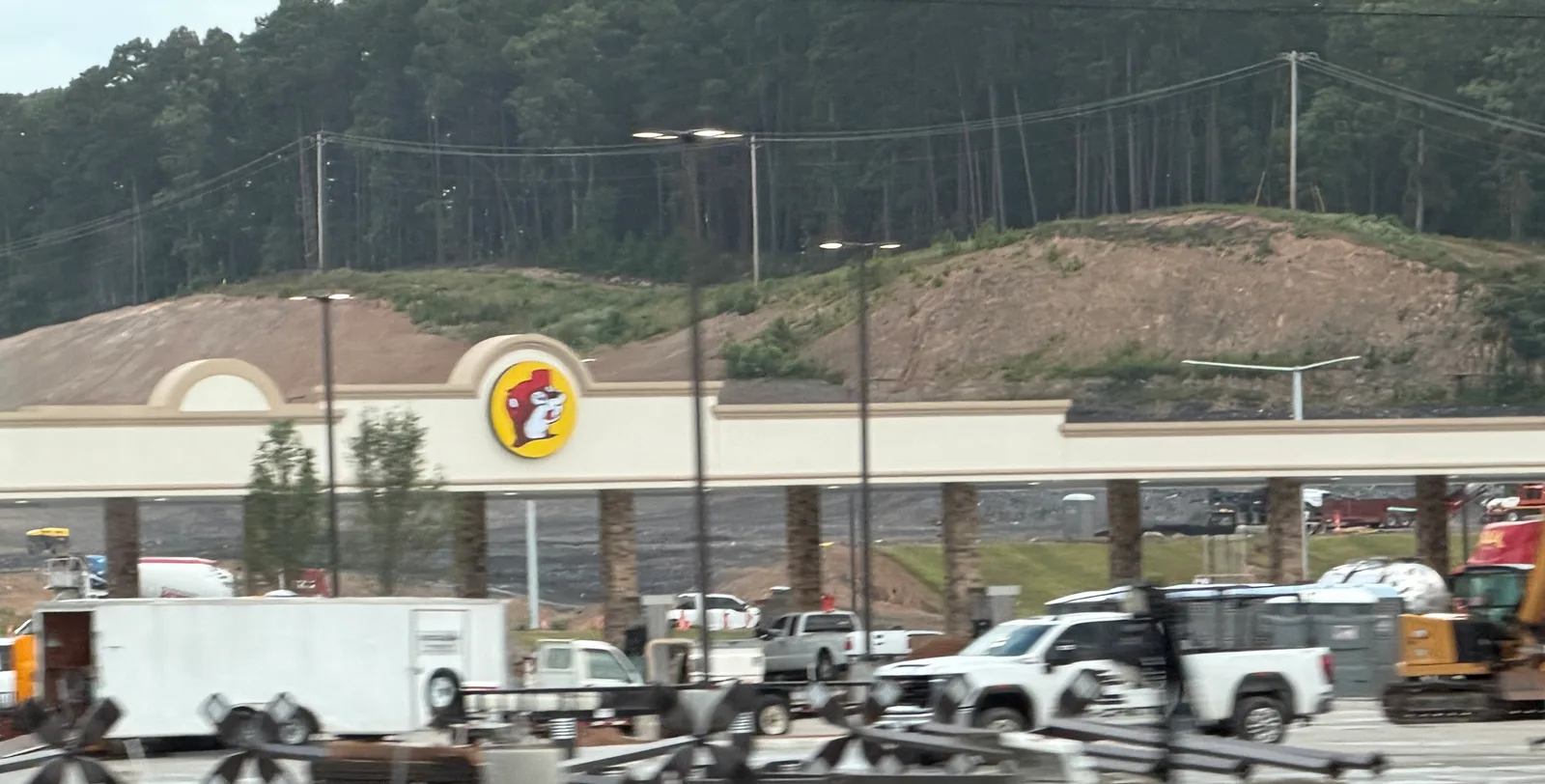
Building facts (opening date, size, pumps, parking, jobs) from local news coverage of the Benton Buc-ee's announcement, including KARK and the Benton Courier. System sizing figures are Jet Heat and Air's own estimates from standard commercial load calculations; Jet Heat and Air is not affiliated with or the mechanical contractor for the Buc-ee's project. Photos show completed Buc-ee's locations in Sevierville, TN and Leeds, AL — not the Benton site — and are used under Creative Commons licenses via Wikimedia Commons.